Home
All Home Types
Renovation Journey
About Calabria
Services
Team
Contact
Attractions
Schedule a Consultation
ITALIAN HOUSES CALABRIA
Four extraordinary destinations within reach of Davoli Village — each a world of its own, shaped by myth, history and the Mediterranean sea.
Province of Vibo Valentia · Costa degli Dei
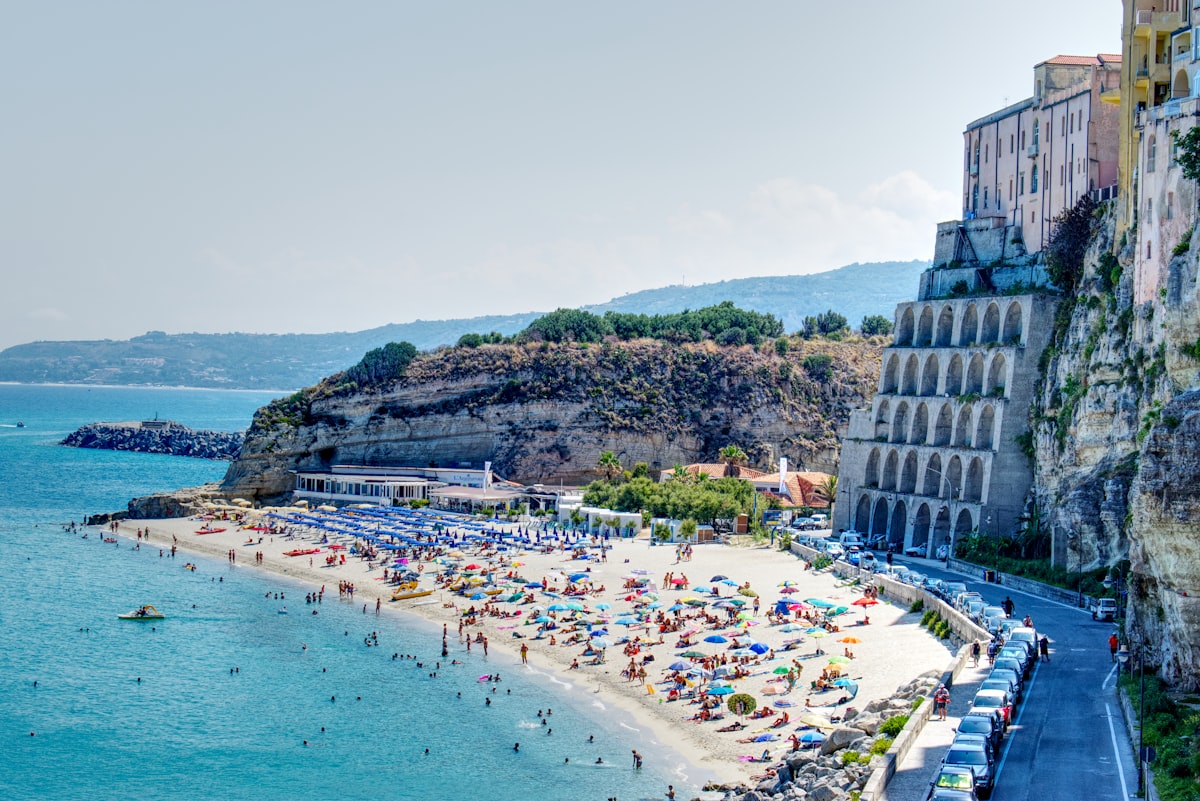
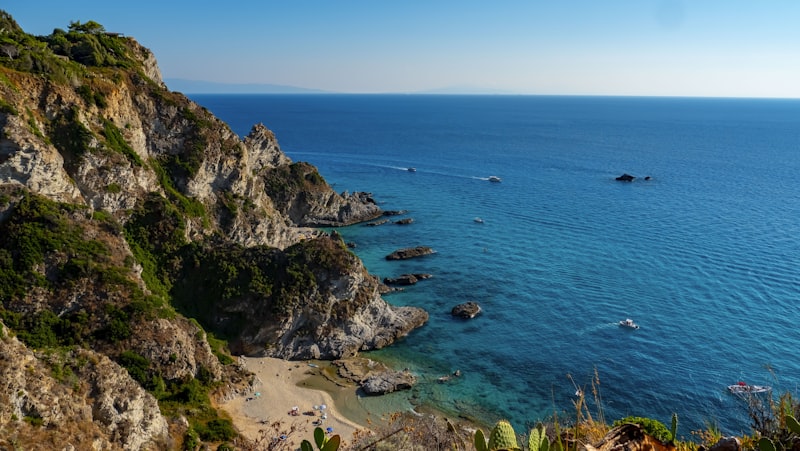
Perched dramatically on a cliff above crystal-clear turquoise waters, Tropea is one of Calabria's most celebrated towns — and arguably the most visually spectacular on the entire Tyrrhenian coast.
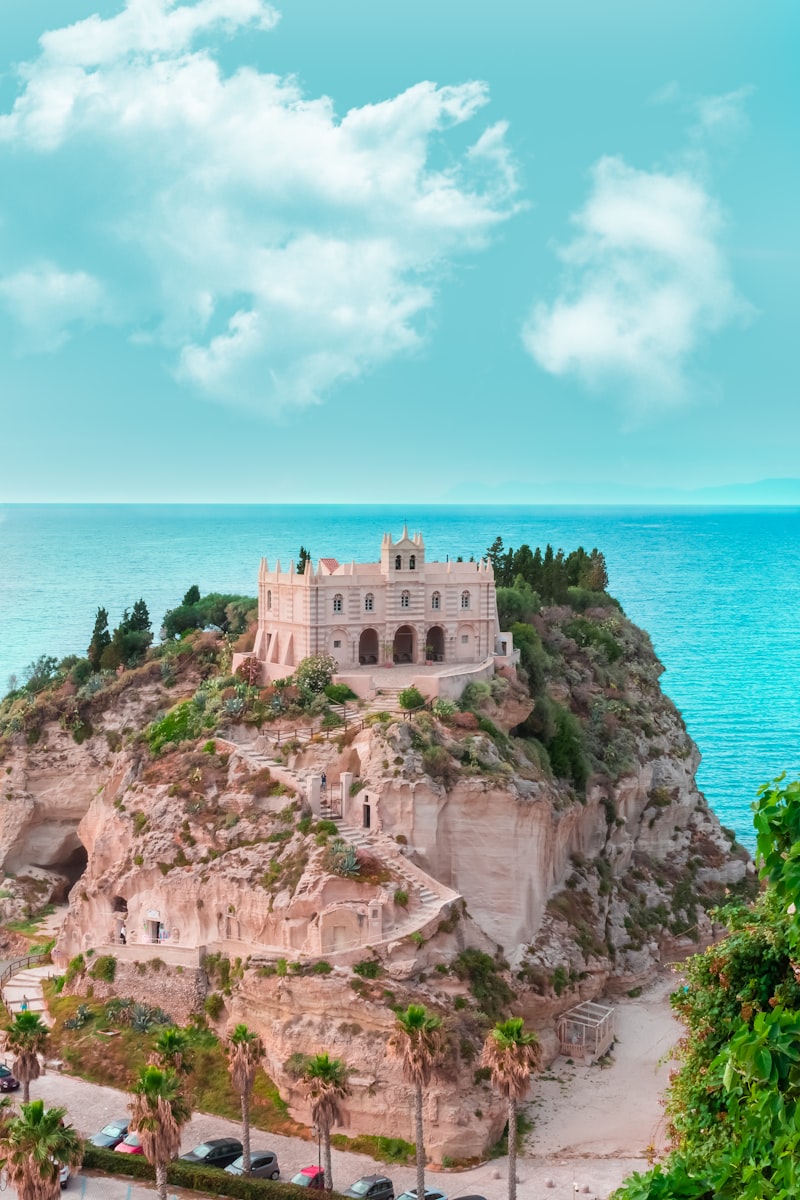
Legend holds that Tropea was founded by Hercules himself on his return journey from Spain, and the town has since been shaped by Greeks, Romans, Byzantines, Norman lords and Spanish admirals. Its old town is a maze of narrow lanes, noble palaces and sun-lit piazzas where time appears to stand still. The landmark Sanctuary of Santa Maria dell'Isola — a medieval monastery perched on a rocky promontory that becomes an island at high tide — is among the most photographed sights in all of southern Italy. The Cathedral of Santa Maria di Romania, built in the Norman era and enriched in the Baroque period, houses a 15th-century wooden crucifix and a painting attributed to the school of Giotto.
Tropea's beaches, awarded the EU Blue Flag for environmental quality, were ranked among Europe's top twenty by the Sunday Times. The famous red onion of Tropea — prized for its exceptional sweetness — is a culinary symbol of the entire region and celebrated each July at the town's lively Red Onion Festival. From the harbour, boat trips depart for day excursions to the Aeolian Islands, including the active volcano of Stromboli.
Province of Reggio Calabria · Strait of Messina
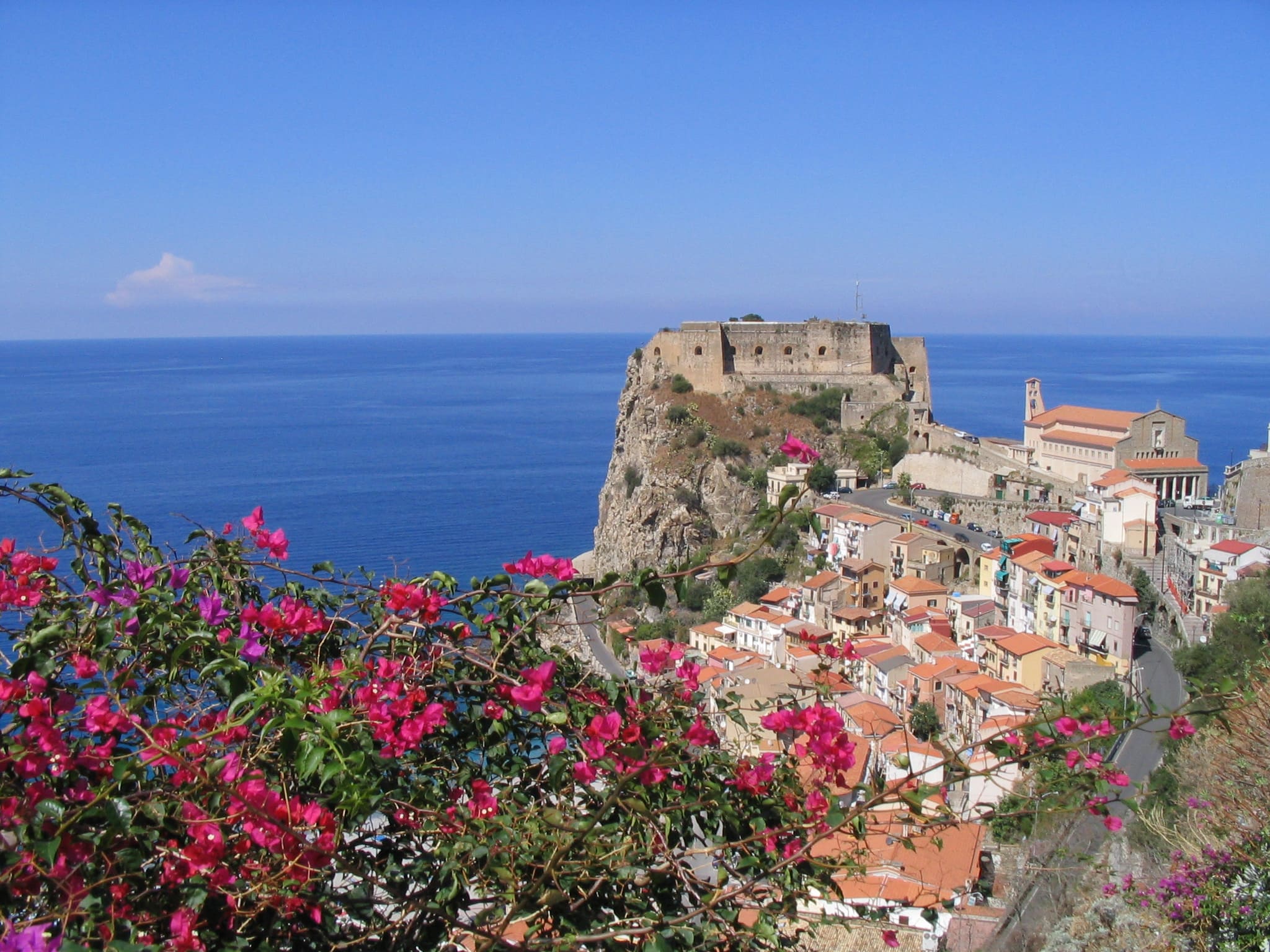
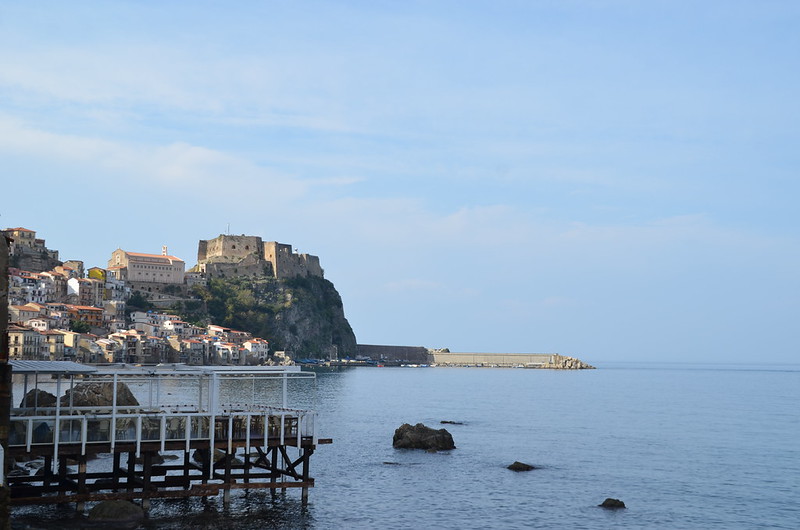
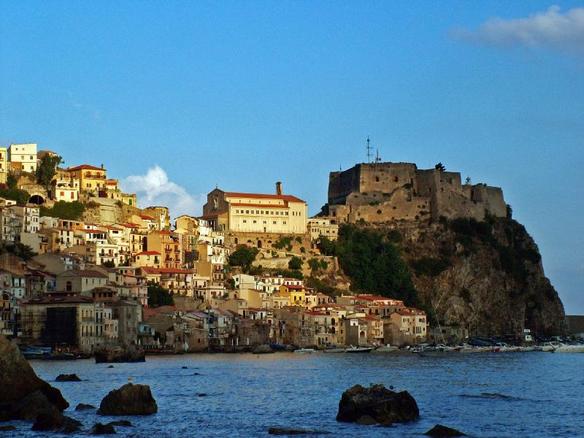
A place where Greek mythology meets the Tyrrhenian shore. Scilla is one of Calabria's most enchanting coastal villages — built around the same rocky promontory that Homer described in the Odyssey as the lair of the six-headed sea-monster Scylla.
The town sits at the southern tip of Calabria, framed by the sapphire waters of the Strait of Messina with Sicily clearly visible on the horizon and, on clear days, the Aeolian Islands beyond. Scilla's most iconic landmark is the Castello Ruffo, a fortress whose foundations date to 493 BC, rebuilt by the Normans and Aragonese over the centuries. From its battlements the panorama over the strait is extraordinary. The harbour below is home to the long-prowed feluche swordfish boats — a centuries-old tradition that continues today and is celebrated each August with the Festa del Pesce Spada.
Chianalea, the ancient fishing quarter, is often called the "Venice of Calabria": its stone houses rise directly from the water, with small boats moored in doorways and narrow alleys that open unexpectedly onto the sea. The wide sandy beach of Marina Grande, 800 metres long, is one of the finest on the Costa Viola. Scilla's crystal-clear waters make it ideal for snorkelling and diving at Punta Pacì, a nature reserve rich in marine flora and fauna.
Province of Reggio Calabria · I Borghi più belli d'Italia
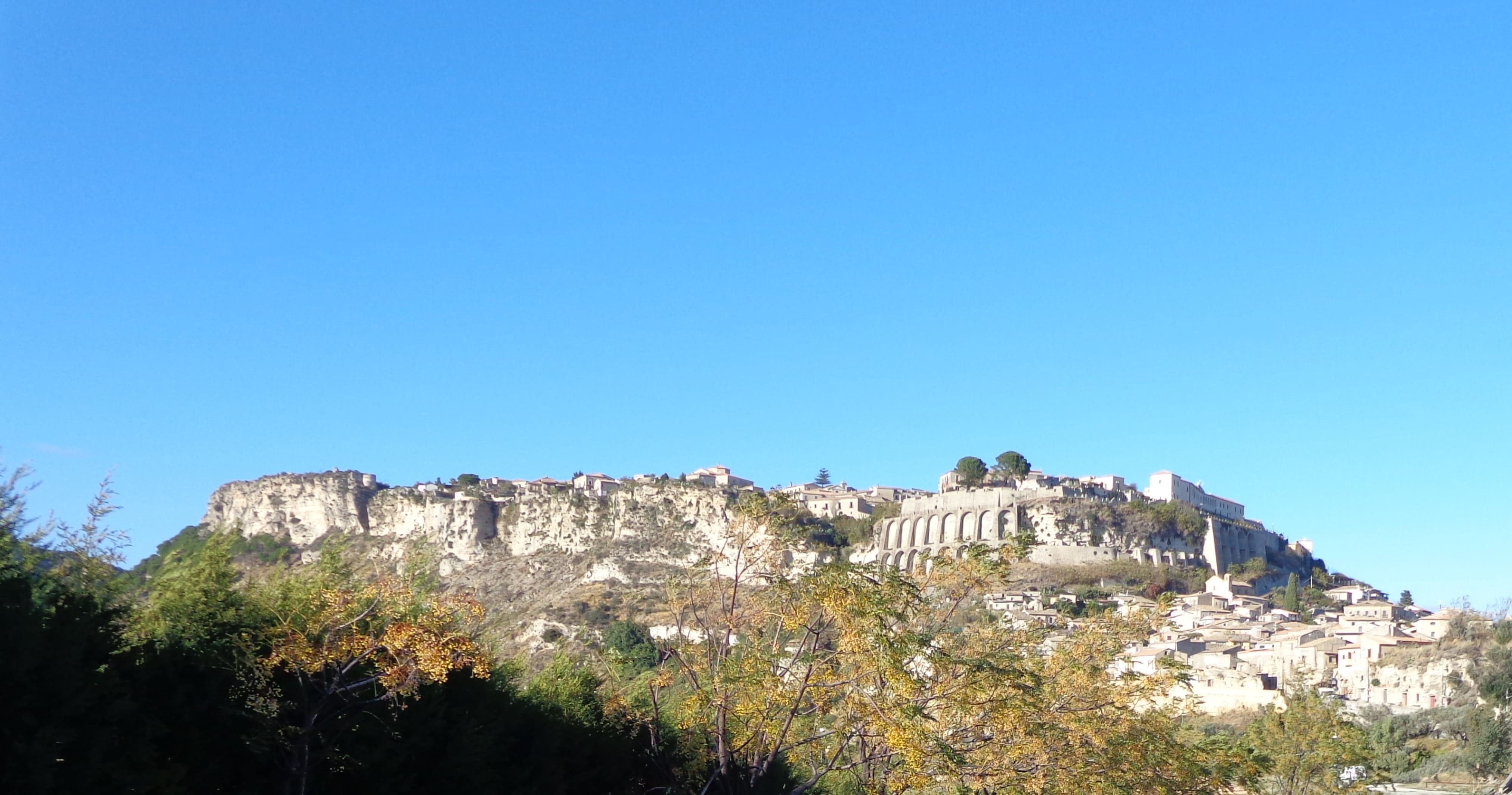
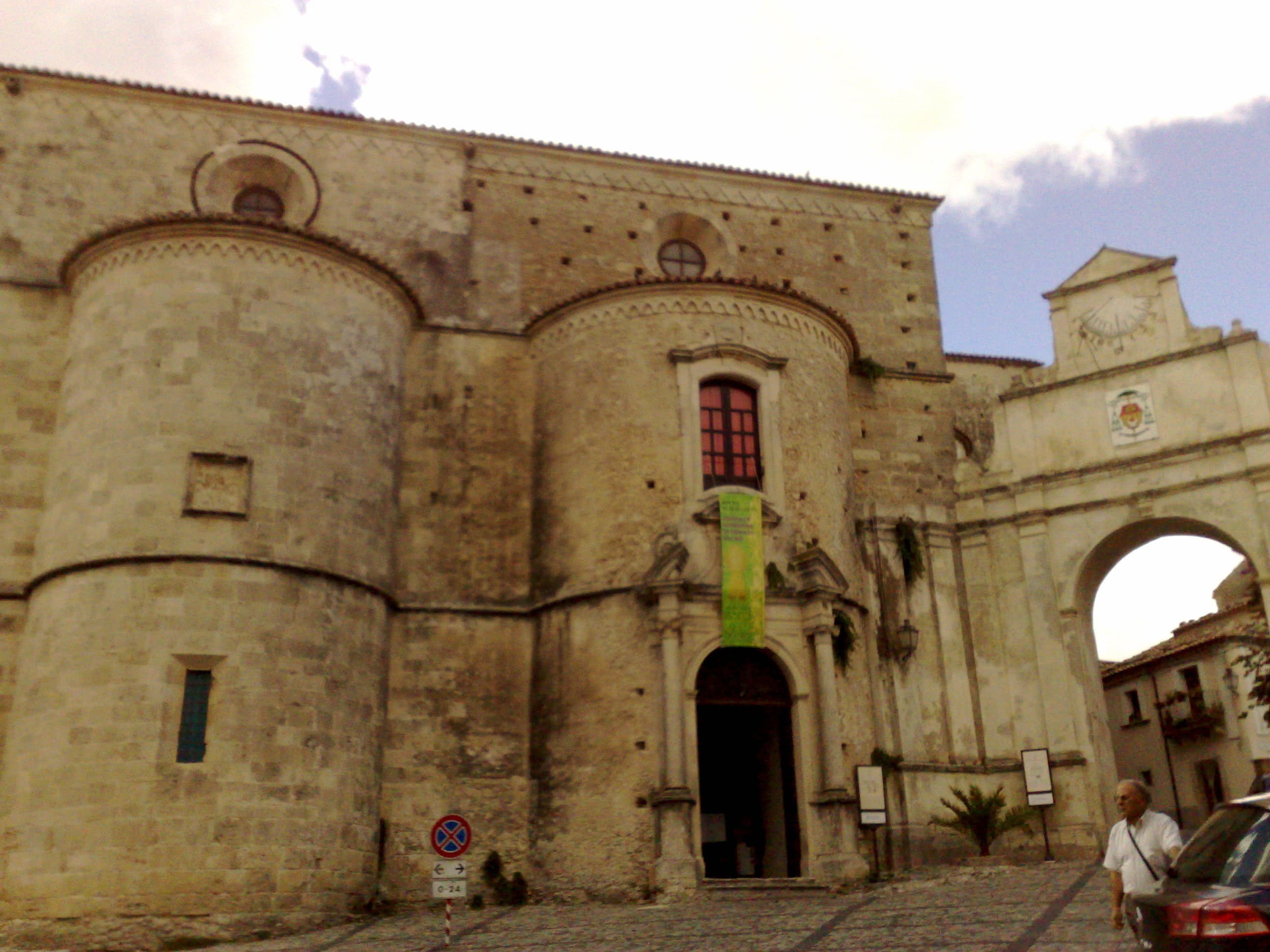
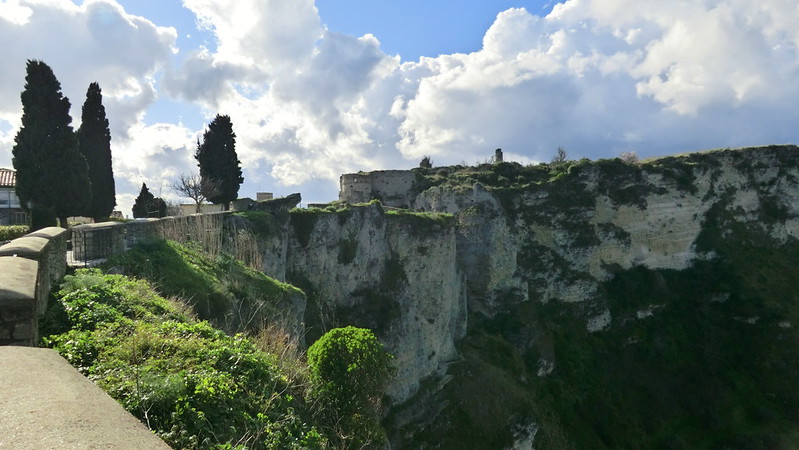
Perched on a 500-metre vertical crag at the edge of the Aspromonte mountains, Gerace is one of the best-preserved medieval towns in all of southern Italy — and ranks among the official list of Italy's Most Beautiful Villages.
The town was founded in the 7th century AD by survivors of ancient Locri who fled inland after Saracen raids destroyed their coastal city. Its natural setting — a sheer rock formation of fossilised sea sediments 60 million years old — made Gerace an almost impregnable fortress. The Normans built upon this advantage, erecting the great castle that still dominates the hilltop, and commissioning the Cathedral of Santa Maria Assunta around the year 1000. With its 26 columns salvaged from the ruins of ancient Locri Epizefiri, the cathedral is the largest Romanesque-Norman church in Calabria.
At its medieval peak, Gerace was home to 128 churches — earning it the name "the holy city". Seventeen survive today, including the Byzantine-influenced churches of San Giovanni Crisostomo and Santa Maria del Mastro. The English writer and illustrator Edward Lear, visiting in the 19th century, was so struck by the town that he wrote: "Full of beautifully situated palaces… every rock, shrine or palace seems arranged and coloured especially for artists." From the castle ruins the panorama stretches south to the Ionian coast, the site of ancient Locri visible below.
Provinces of Cosenza, Catanzaro & Crotone · Est. 2002
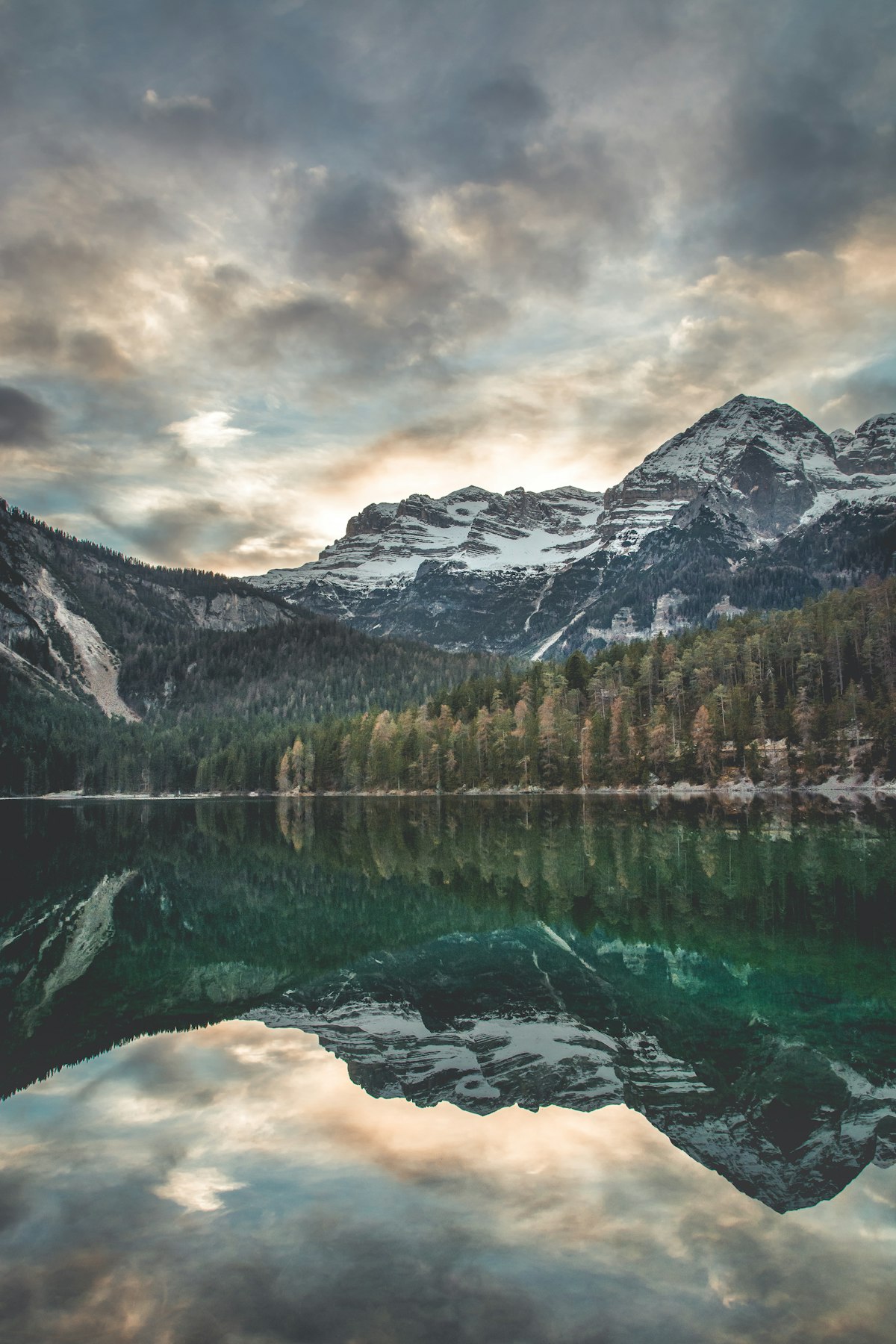
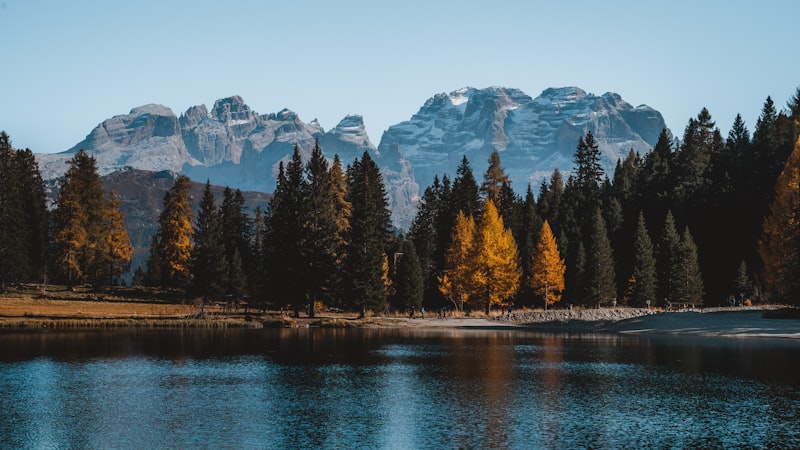
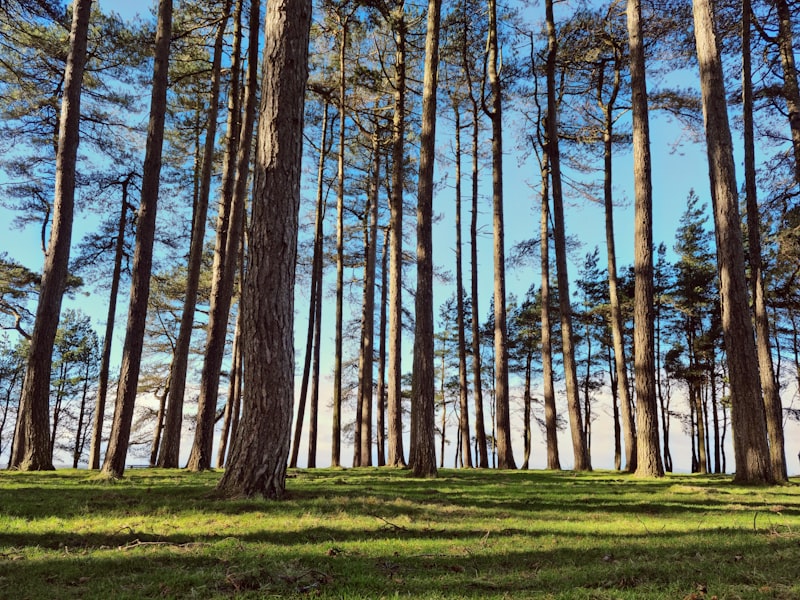
High above Calabria's sun-scorched coastline lies a different world entirely: the vast Sila plateau, a highland wilderness of ancient pine forests, glacial lakes and clean mountain air said to be the purest in all of Europe.
Covering over 73,000 hectares across three provinces, the Sila National Park is one of Italy's largest protected areas. The landscape shifts from dense forests of Calabrian black pine, beech and chestnut to open meadows, granite peaks and shimmering artificial lakes — Arvo, Ampollino and Cecita — created in the early 20th century for hydroelectric power and now beloved by canoeists, fishermen and wild swimmers. The park is home to the legendary Giants of Fallistro, a grove of ancient Calabrian pines over 40 metres tall, some with trunks eleven metres in circumference and more than 800 years old.
The Sila is an all-seasons destination. In summer, hundreds of kilometres of well-marked trails invite trekking, mountain biking and horse-riding through forests alive with deer, roe deer and wolves. The Cupone Environmental Centre at Lake Cecita houses a nature museum, botanical garden and wildlife observatory popular with families. In winter, the resort of Lorica offers 24 kilometres of ski slopes and five lifts — making it one of the more surprising ski destinations in the Italian south. Throughout the year the Sila yields exceptional local produce: porcini mushrooms, chestnuts, fresh cheeses, cured meats and the celebrated Sila potatoes.
All of these attractions are within easy reach of our available properties. Take a look.
Specializing in authentic village properties in Calabria, Italy. We help you find your dream home in Italy's most beautiful region.